01
Small Chips
Composite resin may be used to restore the appearance of selected minor chips, depending on their size and location.
Dental bonding is a cosmetic option that may help improve the appearance of selected teeth with minor chips, small gaps, or uneven edges. It uses tooth-coloured composite resin shaped to suit the tooth.
Discover how bonding works, which concerns it may address, and what to consider before choosing treatment. A dental consultation can help determine whether it is suitable for your smile.
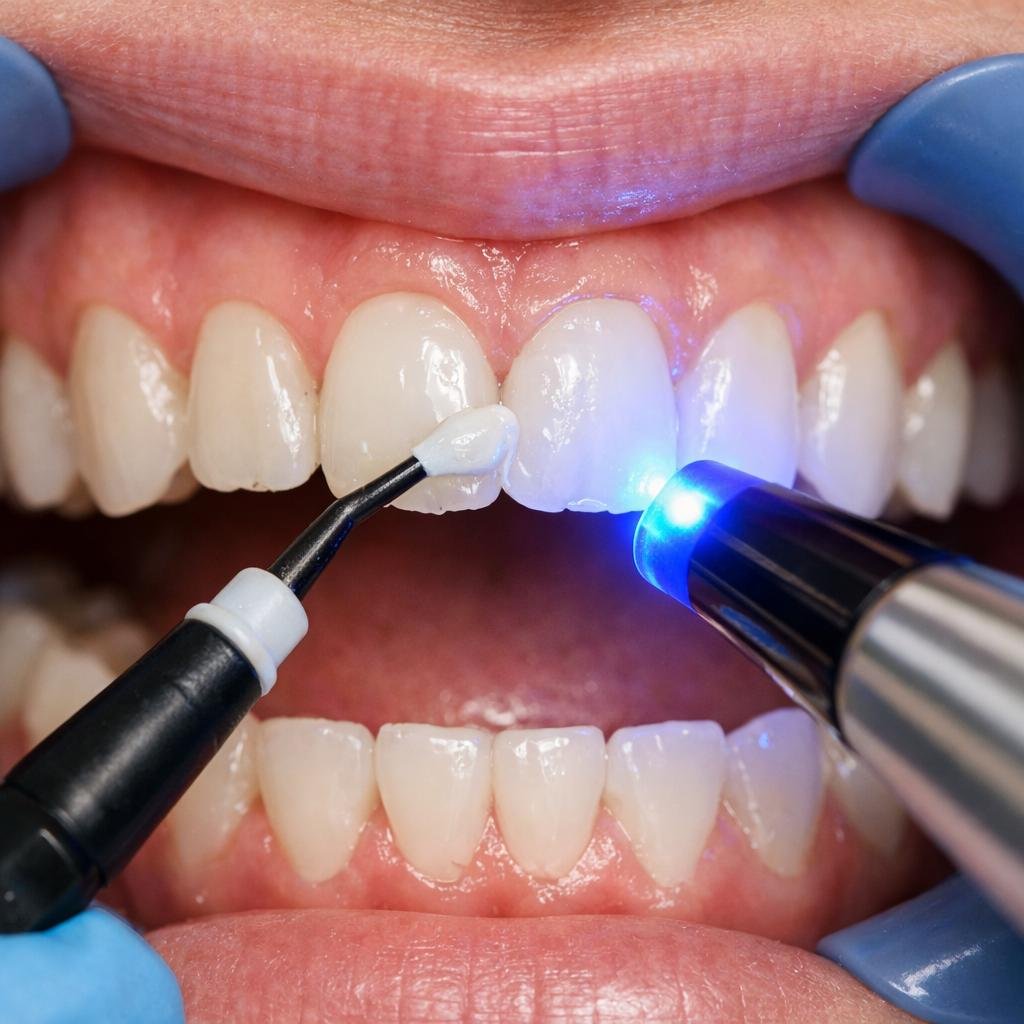
Cosmetic dental bonding involves applying tooth-coloured composite resin to selected areas of a tooth. The material is carefully shaped and hardened, then polished to help it blend with the surrounding tooth.
Bonding is often considered for relatively minor cosmetic concerns. The best treatment depends on the tooth's condition, the location of the concern, your bite, and your expectations.
For suitable cases, bonding may address certain visible concerns without the same level of tooth preparation often associated with some other cosmetic treatments.
Composite resin may be used to restore the appearance of selected minor chips, depending on their size and location.
Bonding may help adjust the outline of teeth when small changes are appropriate for the tooth and bite.
In selected cases, resin can change the appearance of small spaces between teeth. Other options may be more appropriate for some gaps.
Bonding may be used to modify the visible contour or shape of a tooth for a more balanced appearance.
Composite material may cover certain localised colour concerns, although the cause of discolouration should first be assessed.
Bonding may be an option for certain small cosmetic repairs when the tooth is otherwise suitable for treatment.
Bonding may be considered when the concern is relatively minor and the tooth is healthy enough for treatment. Your dentist will consider the size and position of the repair, the bite, and the appearance you want to achieve.
Composite resin can stain, chip, or wear over time. It may need polishing, repair, or replacement. The material may also have limitations when used on teeth that experience heavy biting forces.
The exact steps depend on the tooth, the type of concern, and the treatment plan agreed with your dentist.
Explain what you would like to improve and let your dentist know about any discomfort or previous dental work.
Your dentist can examine the tooth, surrounding gums, and bite to decide whether bonding is suitable.
Discuss the proposed repair, expected appearance, aftercare, and possible alternatives before proceeding.
Everyday oral hygiene and sensible habits can help maintain the health of your teeth and the condition of the bonded material.
Brush twice daily with fluoride toothpaste and clean between your teeth every day.
Do not bite fingernails or use your teeth to open packaging. Avoid biting very hard objects.
Ask your dentist about maintenance and report any roughness, chips, or changes to the bonded area.
Your dentist can help compare possible treatments according to your tooth condition and goals.
Dental bonding commonly uses tooth-coloured composite resin. The material is shaped and hardened on the tooth, then polished.
Bonding may be suitable for some minor chips. Larger fractures, pain, or damage affecting the inner tooth may require a different treatment, so an examination is important.
Composite resin is selected and shaped to blend with the tooth as closely as possible, but the final appearance depends on the tooth, material, and individual case.
Composite resin can stain or lose its polish over time. Your dentist can advise on care and whether maintenance or repair may be needed.
No. Bonding uses composite resin applied directly to a tooth. Veneers are custom-made coverings bonded to the front surface of selected teeth. Their preparation, materials, and suitability differ.
Lilium Medical Center is located at Qudrat Building, Office #207, 2nd Floor, Gharnatah Street, Al Muwaihat 3, Ajman, UAE.
Contact Lilium Medical Center to enquire about a consultation and find out whether cosmetic dental bonding may be suitable for your needs.
Address: Qudrat Building, Office #207, 2nd Floor, Gharnatah St, Al Muwaihat 3, Ajman, UAE